
Be alert to sudden changes in your child—cyberbullying leaves traces!
Real-life Examples

(This image is only available in Chinese.)
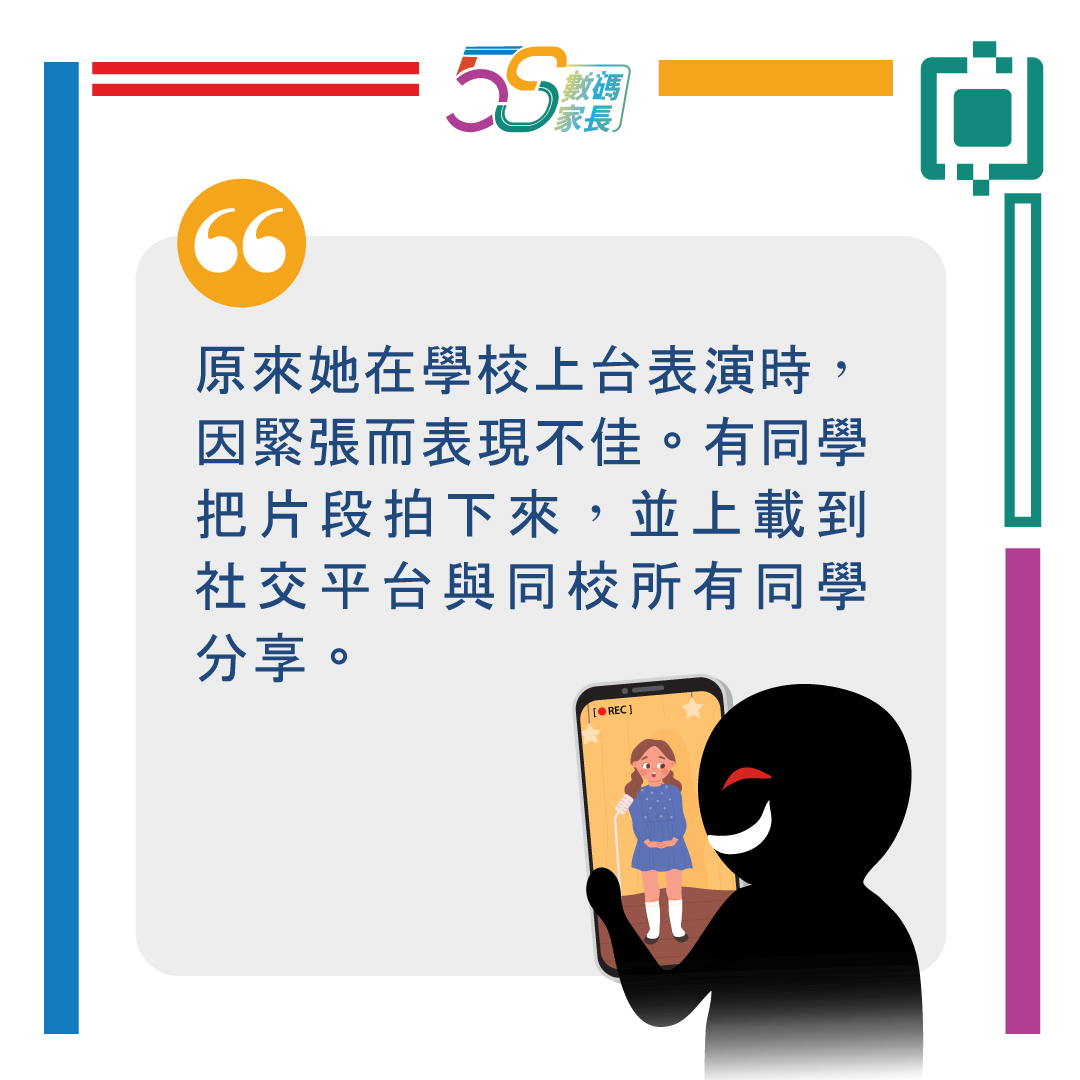
(This image is only available in Chinese.)
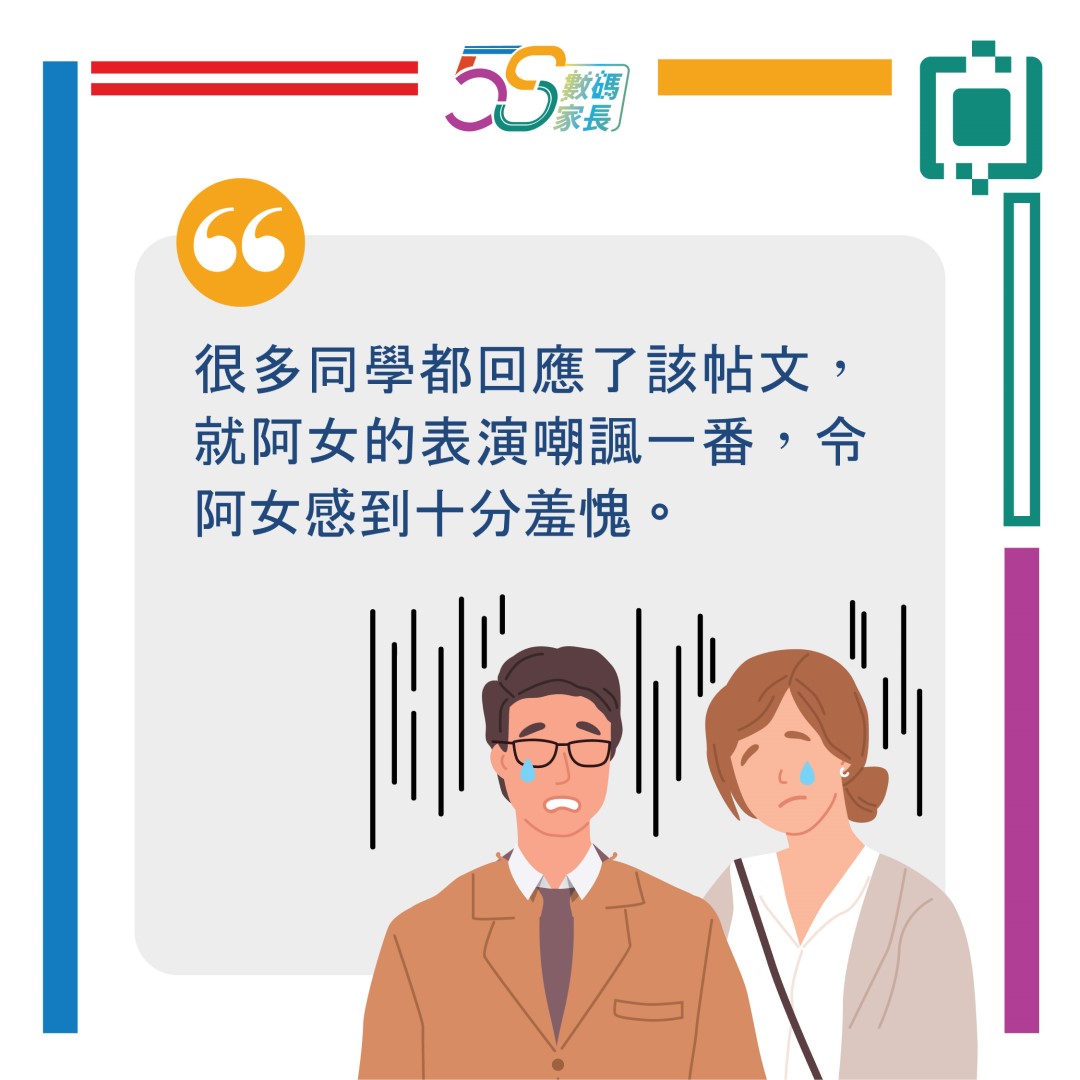
(This image is only available in Chinese.)
Since the rise of the internet, communication between people has become increasingly convenient. For teenagers, going online has become part of daily life. Because they are deeply influenced by the internet, when they face verbal attacks or other bullying behaviours online, they endure significant distress and psychological burden. When children are bullied online, how should parents recognize and respond?
Article Content:
- What is 'Cyberbullying'?
- Common Forms of Cyberbullying
- How to Tell if Your Child is Being Cyberbullied
- Simple Tips & Tricks
1. What is “Cyberbullying”?
"Cyberbullying" generally refers to the intentional use of communication technology platforms—such as email, discussion forums, online gaming networks, and social media—to cause distress or discomfort to another person.
To date, there is no universally accepted definition of “cyberbullying.” Some define its targets as limited to adolescents or younger individuals; when adults are involved, it is often termed ‘cyberstalking’ or “online harassment.” This distinction remains controversial, but it is certain that both adults and children can experience negative psychological reactions from cyberbullying, such as fear, loss of confidence, depression, anger, frustration, or shame. In severe cases, victims may even develop suicidal thoughts.
2. Common Forms of Cyberbullying
Cyberbullying encompasses harassment, defamation, disclosure of real-world identities, false accusations, impersonation, fraud, and exclusionary behaviour. Below are some common examples:
- When victims express unwillingness to receive messages, bullies persistently send disturbing content.
- Sending threatening, harassing, sexually suggestive, or hateful messages to victims via chat rooms, email, etc.—either privately or broadcast to others.
- Mocking or criticizing the victim online with a group of friends.
- Posting public messages online to provoke others into discussing the victim.
- Impersonating the victim to engage in unpleasant behaviour, such as sending harassing messages to others, making it appear as though the victim is causing trouble.
- Exposing the victim's personal information, commonly known as “doxxing.”
3. How to Tell if Your Child is Being Cyberbullied
Children with strong parent-child relationships typically seek help when facing cyberbullying, such as showing parents problematic texts, comments, or posts. However, if the relationship is distant, cyberbullying can be harder to detect. These children may hesitate to confide in parents or choose to conceal the issue from both parents and teachers due to shame or fear.
When bullied online, children may exhibit different reactions. Some may show the following changes:
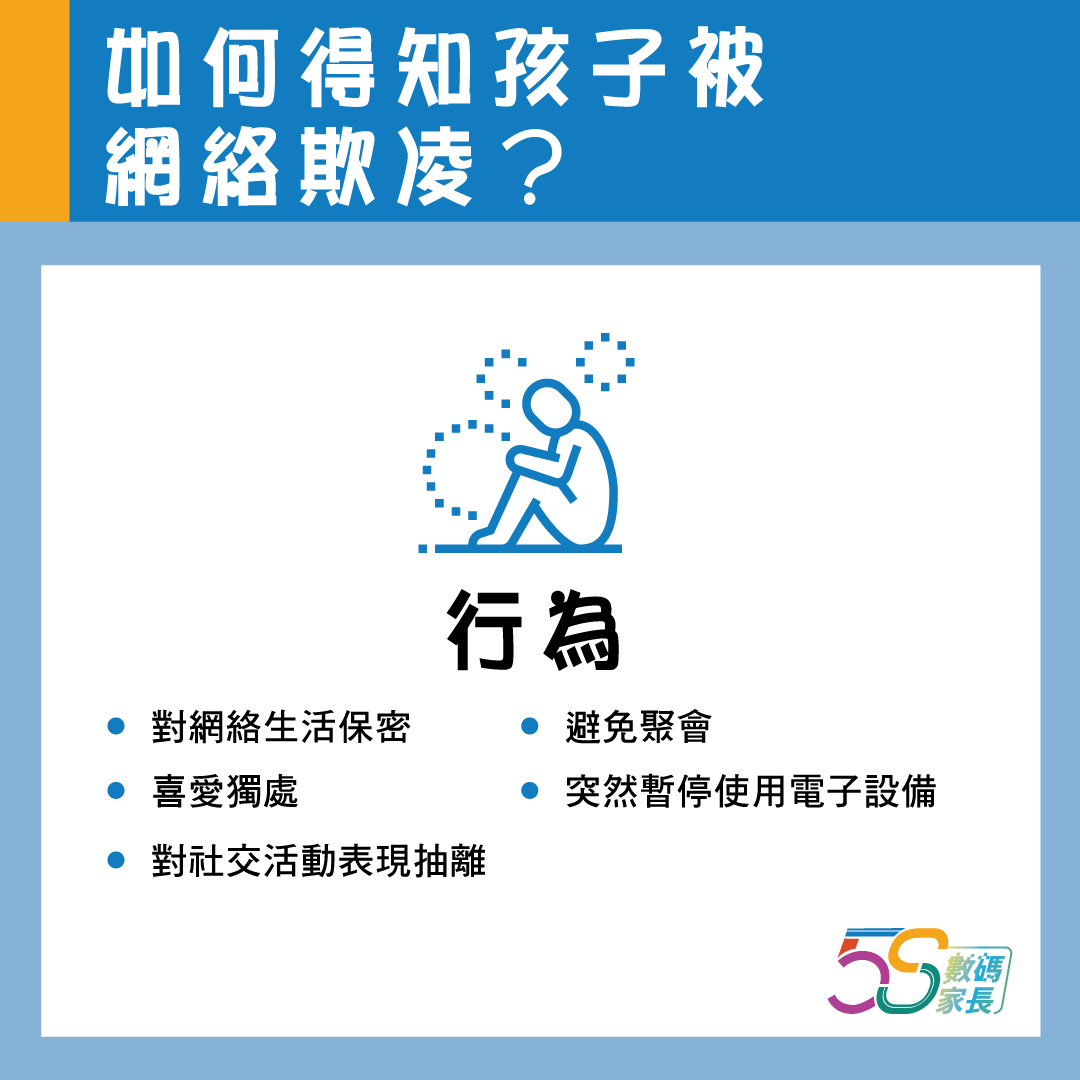
(This image is only available in Chinese.)
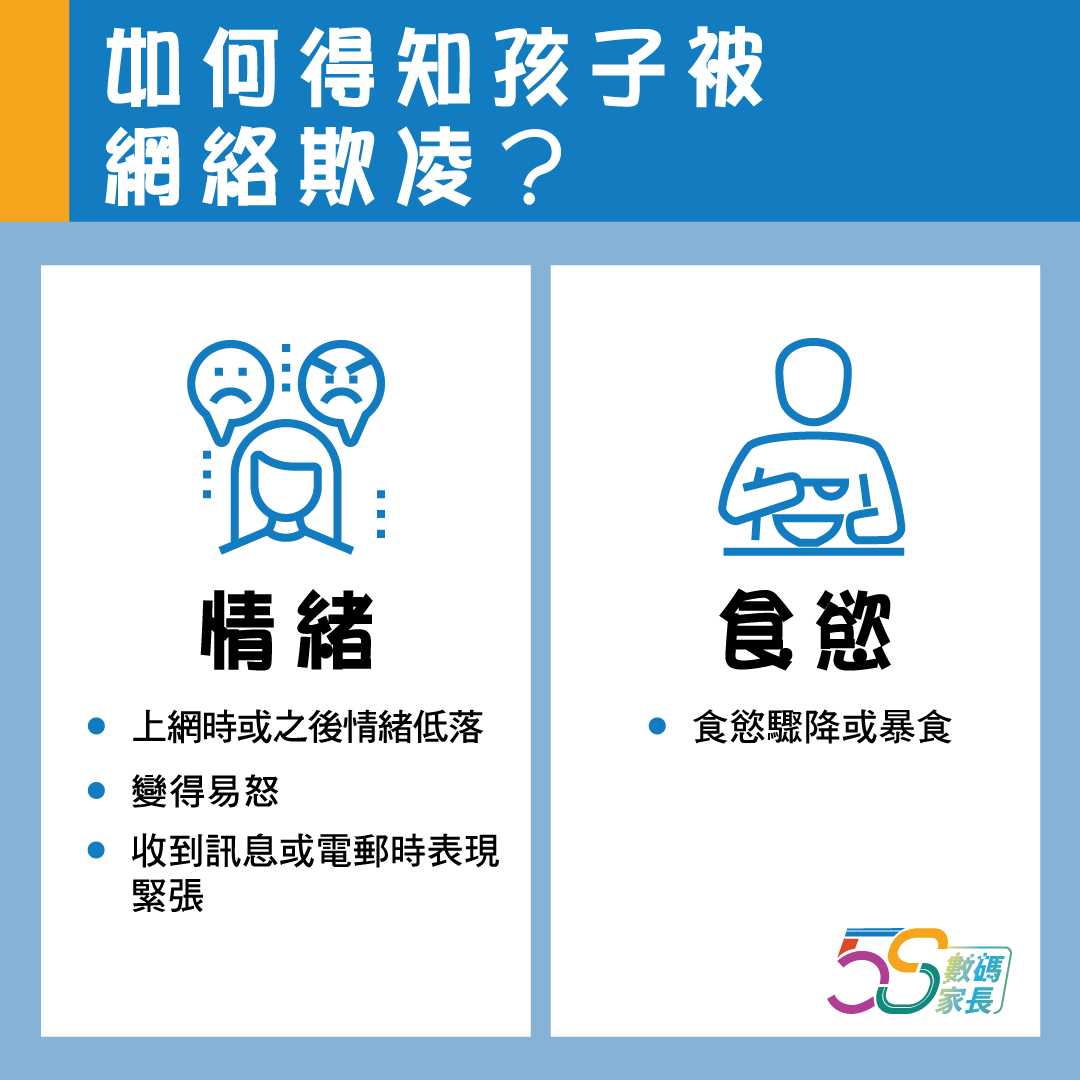
(This image is only available in Chinese.)
Source: kidshealth.org
Parents are advised to first understand the full circumstances when learning about their child's online relationship issues, and to avoid blaming the child during this process.
4. Simple Tips and Tricks
- Cyberbullying refers to the act of bullying others through communication technology platforms.
- Cyberbullying can cause negative psychological reactions in both adults and children.
- Some children who experience cyberbullying will proactively seek help from their parents, while others may feel ashamed or afraid and keep it hidden from parents and teachers. Parents can identify signs of cyberbullying through unusual changes in their child's behavior.
What should you do if you or your child is being cyberbullied? How can we prevent cyberbullying? We will explore these questions in greater depth with our readers in another ‘S’: “Share with Care” as part of the ‘5S Digital Parenting Ambassador Programme’.

[5S Digital Parent] Series:
2. 【5S:Smart Use of Technology 精明使用】 子女與網絡成癮的距離 (in Chinese only)