

Whether in traditional media or online social platforms, idealised or “perfect” body images can be easily found. Many individuals are subtly influenced, gradually adopting these as standards of beauty. For children whose minds are not yet fully developed, such standards exert an even greater impact. While more positive-minded individuals may strive towards these ideals as goals for self-improvement, the concerning reality is that negative thinking leads many adolescents to reject their own appearance. I have witnessed pupils persistently avoiding physical education classes, invariably citing illness whenever sessions occur, thereby squandering opportunities for physical exercise and group activities.
A child's dissatisfaction with their appearance carries significant consequences. It not only undermines self-confidence and self-esteem, affecting mental wellbeing, but also impedes social development. To overcome this hurdle of “appearance anxiety”, parents may find the following tips useful.
Tip #1: Cultivating Positive and Sound Values
Establishing positive and sound values is fundamental and serves as the most effective safeguard for adolescents' development, benefiting them throughout their lives. The earlier these values are instilled in children, the more effective the outcome. At an appropriate time, parents may discuss appearance with their children, gently inquiring about their own perceptions of their looks. Parents can then explain that physical features are innate – whether perceived as good or bad, the child bears no fault. What truly matters is not outward appearance, but health and spirit. Others' opinions are secondary; self-acceptance is paramount.
Tip #2: Choosing the Right Environment to Communicate with Your Children
As children grow older, both they and their parents become increasingly busy, leaving parents with ever-dwindling opportunities to spend time together. Establishing trust and maintaining good communication therefore becomes crucial. How much parents understand about their children's lives depends entirely on how willing the children are to share with them.
Dr Kevin Haggerty, a family relationship expert at the University of Washington, emphasises the vital importance of frequent communication between parents and children. Compared to formal one-to-one, face-to-face discussions, more relaxed settings for conversation – such as during walks, casual chats, car journeys, or when driving children to activities – tend to put children at ease. This makes them more inclined to open up and share details of their daily lives. Therefore, parents should proactively create relaxed opportunities for togetherness, such as inviting children to play sports, go on trips, attend performances, or engage in activities they enjoy. These shared experiences can enhance communication and reinforce shared values.
Tip #3: Show Empathy
One parent encountered the following situation: their daughter, whose face was covered in acne, insisted on wearing a face mask even during PE lessons. Despite the teacher's request, she refused to remove it for physical activities. In such situations, parents should not only discuss their child's circumstances but also attentively listen to their feelings, concerns, and thoughts. During this listening process, parents must avoid criticism or rebuttal. Instead, we can offer positive feedback, such as:
(Image Text translated as:
- I understand your feeling right now...
- It is okay to have such feelings...
- It is normal to think like that...)

By speaking in this manner, parents can express empathy while encouraging their child to open up further.
Maintaining composure when opinions differ is also crucial. This not only encourages the child to share more but also creates an opportunity for parents to explore solutions together, share personal experiences and perspectives, thereby fostering deeper communication and connection between parent and child.
Tip #4: Encourage Children to Leverage Their Strengths
Young people often fixate excessively on their physique and appearance, overlooking their genuine talents. Parents can counteract this negative mindset by acknowledging and affirming their children's positive attributes. This guidance helps them develop a more resilient and proactive attitude when confronting humiliating situations, such as facing criticism about their looks.
Howard Gardner, Professor of Education at Harvard University, proposed the ‘Theory of Multiple Intelligences,’ suggesting that individuals possess diverse intellectual inclinations beyond linguistic and mathematical abilities. When children achieve success in fields such as music, sports, or the arts, their self-confidence significantly increases. Simultaneously, they come to realise that physical appearance is not the sole measure of life's worth; what truly matters is living a fulfilling life by harnessing one's unique strengths.
Caption: The Eight Intelligences under the Theory of Multiple Intelligences
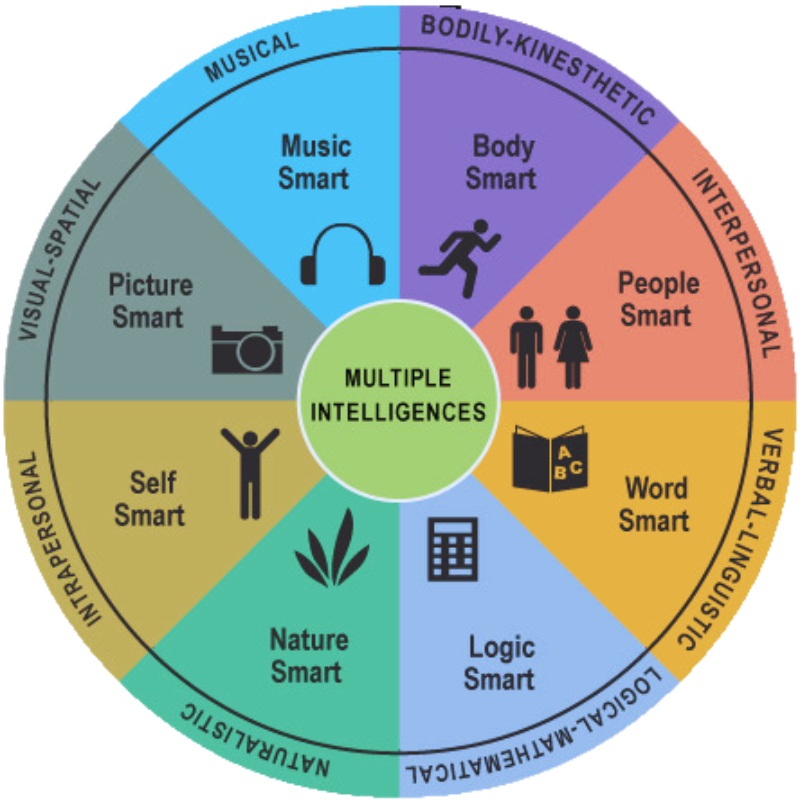
多元智能理論下的八大智能
(圖片來源:https://commons.wikimedia.org/wiki/File:Multiple_intelligences_of_Howard_Gardner.png)
Under this framework, parents should actively encourage their children to explore new experiences—such as acquiring fresh knowledge, trying unfamiliar sports, or volunteering—to help them discover their unique qualities and worth, rather than fixating on physical comparisons. If unsure about suitable activities, parents may consult their child's teacher.
Tip #5: Guiding Children to Pursue True Beauty
Parents may wish to engage in discussions with their children, helping them understand that physical appearance is innate, subject to limited change, and inevitably fades with time. Even those blessed with star-like beauty will age over the years; inner beauty, however, is different—it is genuine and enduring. While appearance can be enhanced through clothing and cosmetics, those lacking inner beauty cannot deceive others through mere pretence.
Parents may use examples from their children's surroundings to illustrate inner beauty. Ask them to identify virtues in peers—such as honesty, respect, or humility—and further explain that these qualities constitute inner beauty. Though invisible, inner beauty manifests in every gesture and demeanour. How then to nurture this quality in children? To demonstrate that these principles are not mere rhetoric, parents must lead by example, embodying the value of inner beauty through tangible actions. This includes managing emotions to navigate life's ebbs and flows, and enriching knowledge through reading – gradually cultivating an inner world of beauty.
Building a positive and trusting relationship with one's children forms the foundation for accompanying their growth, a process that cannot be rushed. Let us strive together with our children, facing life's joys and sorrows side by side, guiding them to let their lives blossom with a unique radiance.
Reference Materials: https://newsinhealth.nih.gov/2019/06/parenting-teens
Source: https://newsinhealth.nih.gov/