

In recent years, experiential learning has gained popularity. Does this imply that parents need only engage their children in diverse activities to enhance their experiences and achieve learning outcomes? How can children be effectively inspired through these experiences? Let us practise effective experiential learning beyond the classroom!
Compared to traditional learning, experiential learning empowers children to control their own pace and direction of learning, rather than being passively taught. This self-directed approach enhances learning outcomes. However, arranging a multitude of activities for children does not necessarily guarantee meaningful learning. So, how can parents do better?
For instance, if a child shows keen interest in science, parents might enrol them in STEM workshops to boost motivation through engagement. Furthermore, learning content should connect to real-life contexts, enabling children to apply acquired knowledge flexibly in daily situations and enhance overall learning efficacy.
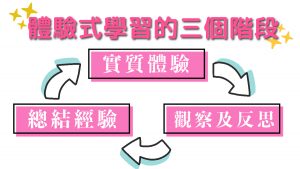
Taking a water filtration experiment as an example, parents can follow these three steps to effectively support their child's experiential learning:
1. Arranging hands-on experiences
Parents may organise relevant activities based on their children's interests. For instance, if a child shows interest in water-related science experiments, parents could accompany them outdoors to gather necessary materials. This preparatory process combines beneficial outdoor activities with physical exercise, while enabling families to conduct water filtration experiments together upon returning home.
For further details regarding the water filtration experiment, please refer to *this link* (only available in Chinese)
2. Encouraging Observation and Reflection
During experiments, parents may encourage their children to observe the process attentively and ask questions proactively. This fosters interaction, broadens their knowledge of the experiment, and deepens their understanding. The learning journey inevitably presents challenges and questions. Parents should encourage children to try again rather than criticise or dismiss their efforts. For instance, when results fall short of expectations, guide them to reflect on potential oversights in the procedure rather than directly pointing out mistakes.
‘Why did the water become cloudy?’ or ‘Shall we review the steps together and see where things might have gone wrong?’
When conducting water filtration experiments, repeated filtering may actually make the water dirtier. Parents can guide children to observe the volume of water poured each time, as well as whether the thickness of materials or the order in which they are added might influence the outcome.
3. Assisting in Reflecting on Experiences
Summarising learning outcomes after an activity is a crucial step. Parents can discuss the activity's benefits with their children and work together to organise the knowledge gained. For instance: Which subjects did this experiment draw upon? Might it prompt us to reconsider our daily habits? Can the knowledge and skills acquired be applied in everyday life?
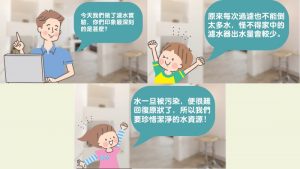
(This image is only available in Chinese)
Crucially, this reflection should be an open discussion, as each individual gains different insights from experiential learning. Parents should avoid dismissing their child's learning outcomes lightly, as this may diminish their motivation.
(This image is only available in Chinese)
Successful experiential learning isn't merely about frequenting museums or attending workshops; parents must adopt a supportive and guiding role. Moreover, while arranging specific learning activities for children is valuable, parents should remember that everyday life itself can be experiential learning. By carefully observing together and jointly reflecting on what they've learnt, parents can distil these experiences into concepts and skills applicable to daily life. Ultimately, the most crucial aspect is for parents to learn alongside their children. Learning should never be simply passed off as the child's responsibility, for when it becomes a burden, the joy is lost.