
This edition of family-friendly destinations focuses on Tsim Sha Tsui. Parents may feel this area is too familiar, lacking novelty. Yet this easily accessible location can be transformed into an outdoor classroom for children with a simple shift in perspective. Let us now guide parents in preparing for various lessons!
Lesson One: History
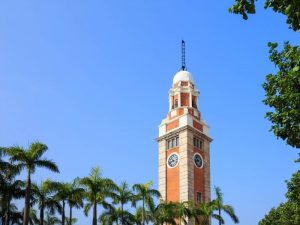
©[Casper1774Studio] on Canva.com
Q: What is the connection between the clock tower and the railway?
A: The Tsim Sha Tsui Clock Tower, completed in 1915, originally belonged to the former Kowloon-Canton Railway Tsim Sha Tsui Station. In 1975, the terminus relocated to the present Hung Hom Station, and the old Tsim Sha Tsui terminus was demolished three years later. Fortunately, the clock tower was preserved and continues to mark the hours for the public.
Q: When does the bell chime?
A: From 2021 onwards, the clock tower resumed its chimes. Starting at 8:00 AM daily until midnight, it chimes hourly to mark the time for the public. Although the Tsim Sha Tsui MTR station has long since relocated, the clock tower stands as a significant record of Hong Kong's railway development history.
Q: How can one best appreciate the clock tower?
A: While many have visited the Tsim Sha Tsui clock tower, few have captured its nocturnal splendour. Illuminated at night, the structure appears even more majestic and imposing. We recommend parents sit with their children by the adjacent pond to admire the tower and discuss its history – perhaps waiting together for the hourly chimes or reflecting on the evolution of Hong Kong's railways.
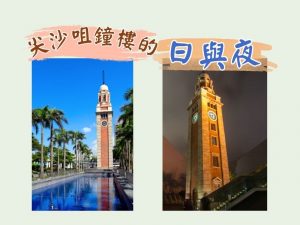
©[Leung Cho Pan] on Canva.com
©[demerzel21] on Canva.com
Lesson Two: Visual Arts
Leaving the clock tower, walk along the waterfront towards Hung Hom to spot a modern building with grey, undulating walls – our visual arts classroom: the newly refurbished Hong Kong Museum of Art!
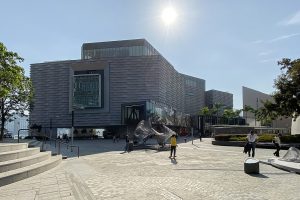
Hong Kong Museum of Art by Wpcpey
Q: Why does the Hong Kong Museum of Art have such a distinctive appearance?
The museum's grey, undulating façade is crafted from cement fibre panels. These panels create a wave-like effect under sunlight while also facilitating heat dissipation. Extensive floor-to-ceiling glazing integrates the gallery seamlessly into Victoria Harbour's landscape, allowing parents and children to admire the scenery on both shores together.
Q: What exhibitions does the Hong Kong Museum of Art host?
The museum presents diverse art exhibitions, showcasing traditional paintings, ceramics and more. Current displays include ‘Shopping in Canton: China Trade Art in the 18th and 19th Centuries (Phase II)’, featuring traditional Chinese crafts. Additionally, contemporary art in diverse forms is showcased, such as the multimedia exhibition ‘By the People: Creative Chinese Characters’ centred on Chinese characters. Parents seeking the latest exhibition information may consult the Hong Kong Museum of Art website.
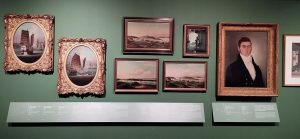
‘Shopping in Canton: China Trade Art in the 18th and 19th Centuries’ exhibition by M H Fong David
Q: Must art appreciation be confined to museums?
Art is part of life; appreciating it needn't be confined to museums. With mindful observation, art can be found everywhere in daily life. After visiting a gallery, extend your art education into everyday experiences by encouraging children to notice life's beautiful details. Parents may also utilise the Hong Kong Museum of Art's ‘Little Heads · Big Discovery ― Parent-child Art Enlightenment Resources for kids aged 2-6’ to continue exploring the world of art at home with their children.
Lesson Three: Biology Class
After two lessons, parents and children might relax at nearby Kowloon Park. Beyond enjoying the playground facilities, we can take an impromptu biology class. At Kowloon Park, why not close your eyes and listen? Can you hear the songs of many birds?
Q: Why can we hear different bird calls?
Because Kowloon Park houses the Bird Garden, home to species such as Yellow-headed Amazon Parrots, Green-capped Parakeets, and African Grey Parrots. Take a moment to observe: how do the living habits of these different birds differ?
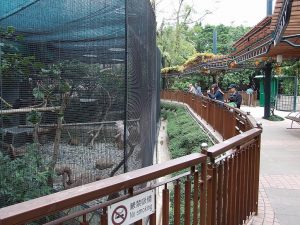
Bird Garden by Chong Fat
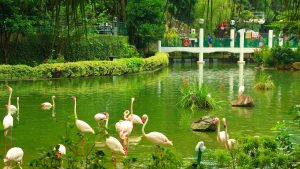
Great Pink Flamingo in Bird Lake ©[okv] on Adobe Stock
Q: What species are those pink birds standing in the water?
The birds standing in the centre of Bird Lake are Great Pink Flamingos. They inhabit brackish water areas where freshwater and saltwater meet. The pink hue of their plumage comes from consuming plankton rich in astaxanthin.
Q: Upon reaching the Arboretum Trail within the park, have you spotted any familiar blossoms?
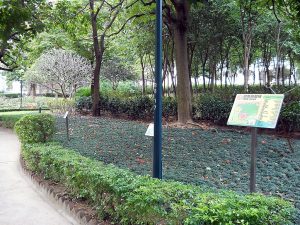
Kowloon Park Arboretum Trail by Chong Fat
October marks the blooming season for the Bauhinia blakeana, an evergreen plant whose flowering period spans from October to March each year. Hong Kong was the first place in the world where this species was discovered, hence its selection as the flower emblem of Hong Kong. With the Bauhinia now in bloom, parents are encouraged to bring their children to Kowloon Park to admire this emblem of Hong Kong.
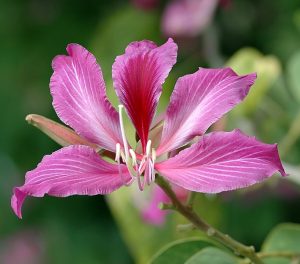
Bougainvillea by Ianare
Tsim Sha Tsui, situated in the city centre, is not merely a destination for leisure and entertainment. Simply by looking up and taking a stroll, knowledge surrounds us in daily life. Even within our everyday neighbourhoods, with careful observation and a willingness to explore, the world becomes a university.