
Should I accept someone's request for sexting (nude chats)?
Real Life Examples

(This image is only available in Chinese.)

(This image is only available in Chinese.)

(This image is only available in Chinese.)
Adolescents in the throes of puberty often harbour curiosity about sexuality, which they may seek to satisfy through various channels, such as cybersex. Criminal syndicates exploit this vulnerability by first befriending young people online, then luring them into sexting before blackmailing them with the resulting images or videos. As parents, how should you guide children to protect themselves?
Article Content:
- What Is Sexting?
- The Dangers of Sexting
- Are Disappearing Messages Secure?
- How To Educate Children to Protect Themselves and Avoid Being Blackmailed by Online Acquaintances?
- Tips and Tricks for Self-protection
1. What is Sexting?
Sexting, or Naked chatting is a form of virtual intimacy involving participants engaging in video calls while nude, exchanging explicit photographs or videos to seek heightened arousal. While often conducted between strangers, such interactions may also occur between couples or sexual partners.
2.The Dangers of Sexting
With Strangers
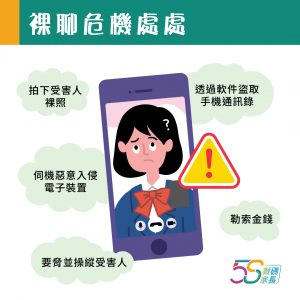
According to Hong Kong Police Force investigations, cases of nude chat extortion in the first half of 2022 rose by 43.6% compared to the same period the previous year. Many victims met the fraudsters through dating apps. The fraudsters gradually shifted conversations to messaging platforms such as WhatsApp, Line, or Signal, demanding nude chats with the victims. Victims typically received a link or were instructed to download an application. Once the link is clicked or the app downloaded, the fraudsters successfully steal the victim's phone contacts. During the sextortion chat, they record the victim's nude images or videos, then blackmail them into paying cash or purchasing prepaid cards, threatening to send the explicit material to their friends and family otherwise.
With Lovers / Sexual Partners
You may feel that your boyfriend/girlfriend is the most intimate and dependable person, utterly trustworthy, and that exchanging nude photos is an expression of passion. However, have you considered the following scenarios?
-
-
- When the relationship ends, how might the other person handle your nude photos or videos?
- Might they share them with friends?
- What if their phone is stolen, and the stored photos or videos leak?
-
Lovers or partners may not intend to harm you, but any media shared online—regardless of intent—leaves a digital footprint, creating a risk of exposure. Therefore, no matter how deeply you trust and love someone, you must protect yourself by avoiding sexting.
(This image is only available in Chinese.)
3. Are Disappearing/Time-sensitive Messages Secure?
Disappearing Messages were pioneered by Snapchat, operating on the principle of “share, but not save”. Users can set the duration for these messages, ranging from a few seconds to a maximum of ten seconds, and recipients cannot save the photos or videos. Should a recipient take a screenshot, the sender receives a notification.
Snapchat's ‘time-limited messages’ feature initially appeared both entertaining and secure, leading users to frequently exchange unflattering or prank photos. Gradually, however, young people began using it to send sexually suggestive content, including explicit photos and videos. Although images or videos sent via Snapchat are automatically deleted, recipients may still download them to their devices. Therefore, users should think twice before sending any photos or videos and avoid sharing sensitive material.
In recent years, social media platforms such as Instagram, Facebook, and WhatsApp have introduced their own “Disappearing Messages” features. However, users should note that these platforms' disappearing messages may not function identically to Snapchat's feature and often do not support customisable time limits. Furthermore, users will not receive notifications if recipients take screenshots.
4.How To Educate Children to Protect Themselves and Avoid Being Blackmailed by Online Acquaintances?
Set Aside Preconceptions and Communicate Calmly
When it comes to discussing sexuality, most parents feel at a loss or find it difficult to broach the subject. Parents must first understand that their children's curiosity about sex is natural. If they discover their child using dating apps or viewing adult content, they should calmly discuss their child's curiosity or needs.
Illustrate Potential Dangers of Online Dating with Real-life Examples
Numerous victims have faced blackmail after engaging in sexting. Parents can find online case studies to explain the risks of online dating and sexting to their children, teaching them how to guard against scammers. This includes instructing them never to click on unknown links or download apps upon request.
Discussing Romance with Children
Many young people fear rejection if they refuse a partner's requests, leading them to comply with various demands, including sexting. Parents should explain that someone who truly loves them will respect their boundaries and not end the relationship over minor refusals.
5. Tips and Tricks for Self-protection
-
- Do not expose your body during video calls
- Do not click on links from unknown sources or download applications
- Do not send nude photographs or videos to anyone, including your partner

(This image is only available in Chinese.)

(This image is only available in Chinese.)

(This image is only available in Chinese.)