

Children treat their online friends with equal sincerity! Understand and protect their innocent hearts.
Real Life Examples
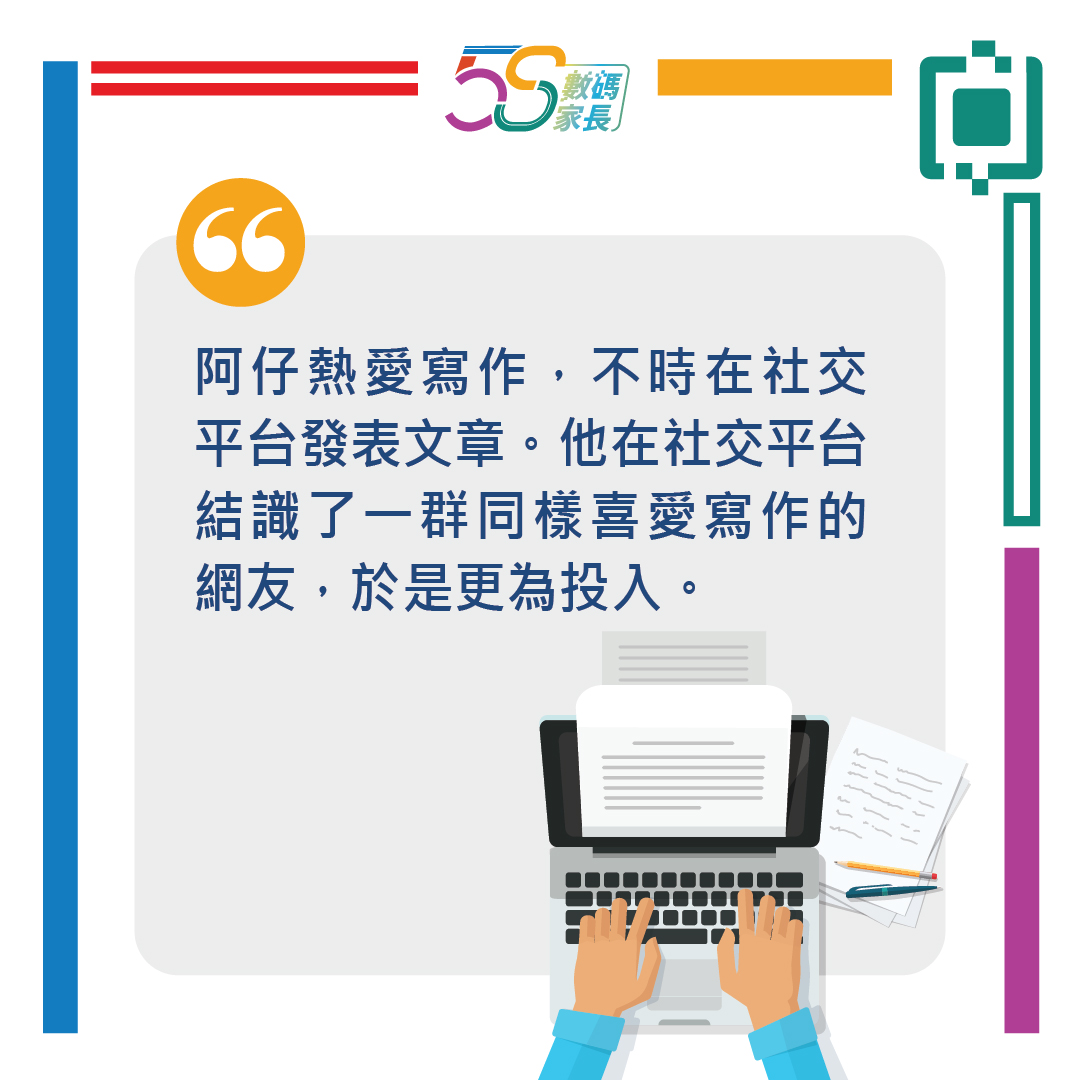
(This image is available in Chinese only.)
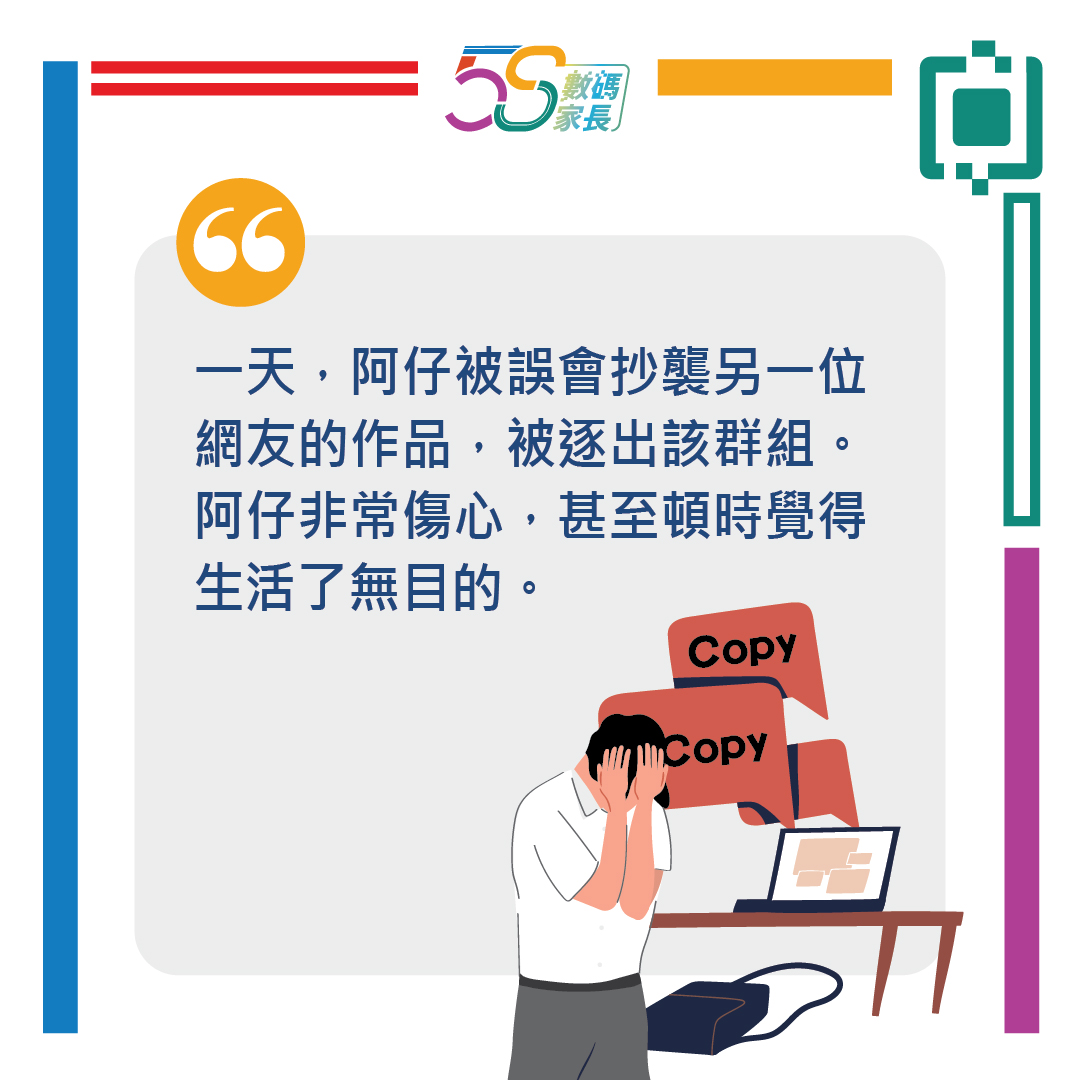
(This image is available in Chinese only.)
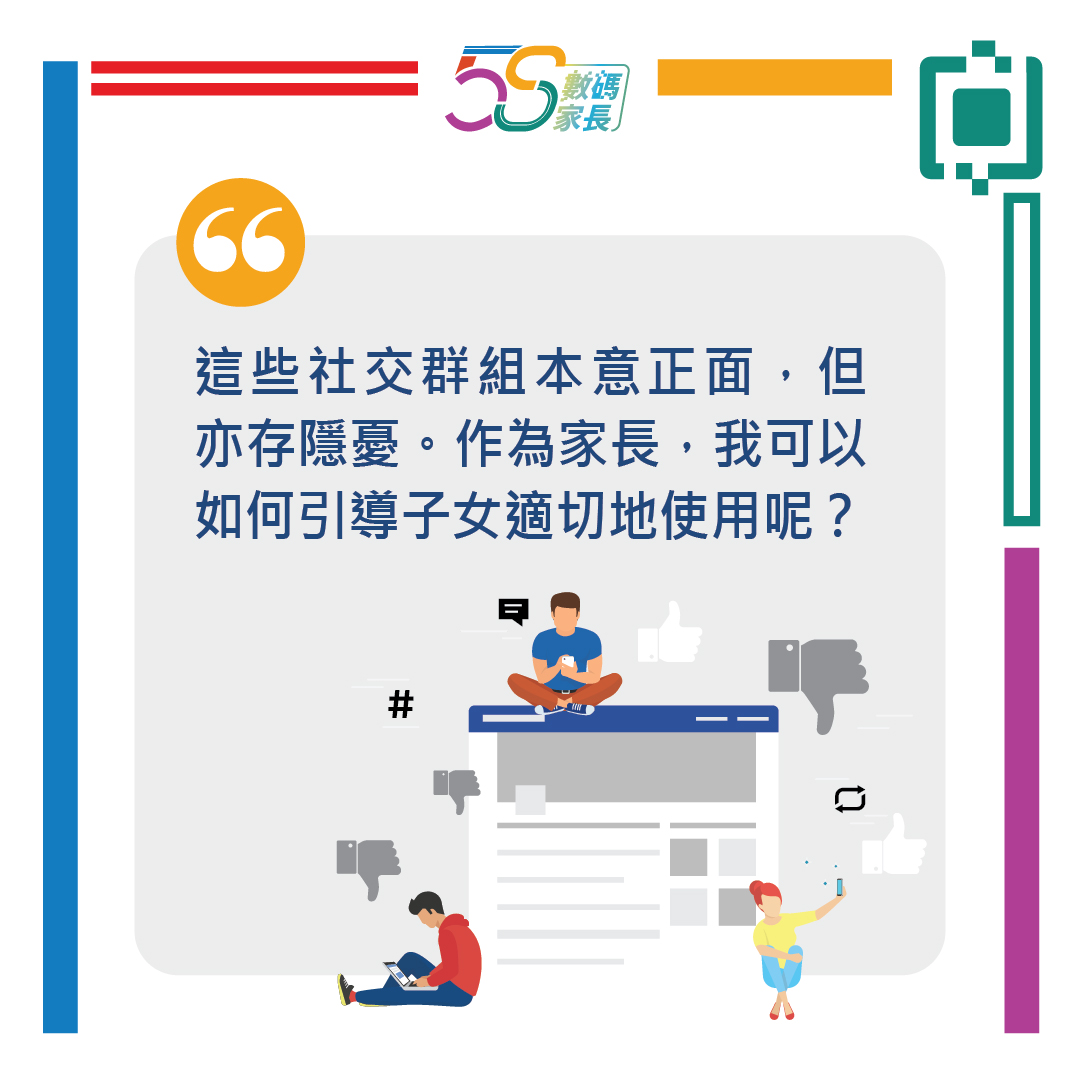
(This image is available in Chinese only.)
Article Content:
- Why does my child socialise online?
- Getting to know common social media platforms (Instagram, Tiktok, Twitter, Weibo, Snapchat)
- Could social media undermine my child’s confidence and cause anxiety?
- Simple tips and tricks
1. Why does my child socialize online?
According to a 2016 survey report by the Hong Kong Family Welfare Society (HKFWS), among the over 1,500 students interviewed, as many as 98.7% indicated that mobile electronic devices were most frequently used for communicating with friends. The digital realm has indeed brought considerable convenience, enabling us to transcend temporal and spatial constraints. Through communication applications, we can interact with others anytime, anywhere, even connecting with individuals in other countries. Through social platforms, we gain opportunities to broaden our social networks, meeting individuals beyond our immediate circles to enrich our experiences and perspectives. Moreover, within groups or fan pages on certain social platforms, it becomes easier to find kindred spirits who share common interests – such as enthusiasts of the same online games or admirers of identical films. When interacting with online acquaintances whom they have never met in person, some individuals feel liberated from the constraints of real-world relationships, enabling them to express themselves more freely.
Reference: ‘Supporting Children on e-Learning’ Parent Seminar (2): Children's Privacy and Internet Culture (in Chinese only)
Your children may derive satisfaction from the internet to fulfil certain psychological needs, though these needs can be met through alternative means. As parents, you can discuss these needs and their fulfilment with your children, seeking suitable ways to address them.
Psychological Needs |
Satisfaction from the Internet |
Satisfaction through Alternate Means |
| Acceptance of Appearance, Physique and Personal Image | As the internet allows them to conceal their identity, they can reshape their image to gain acceptance from friends or online acquaintances. | Peers recognise their appearance and persona;
Through social interaction, they come to understand their strengths and accept their shortcomings. |
| Sense of Belonging | Participating in the online activities common among most adolescents, such as communicating via specific messaging apps and using the same social media platforms as their peer group;
Forming teams with others in online games, joining guilds and alliances; Sharing snippets of daily life or posting selfies on social media to receive attention and responses from others; Finding like-minded individuals online. |
Developing a sense of belonging to both family and school through positive parent-child, peer, and teacher-student relationships;
Actively participating in groups that hold regular activities, such as churches, scout groups, and volunteer teams . |
2. Getting to Know Common Social Media Platforms
Below are some social media platforms commonly used by young people in Hong Kong. Parents may wish to familiarize themselves with these and try them out for themselves:

(This image is available in Chinese only.)
- Instagram
- Instagram (commonly known as ‘IG’) enables users to enhance photographs with various filter effects and add location, person, or custom tags to facilitate filtering of desired information. In recent years, it has also introduced the Stories feature, where users' posted content disappears after 24 hours.
- TikTok (Douyin)
- TikTok enables users to select songs and record clips of 15 seconds or longer, creating music video-like content. Users worldwide can comment on clips or follow favorite accounts, making it immensely popular among both domestic and international audiences.
- Twitter
- Twitter enables users to publish posts of no more than 280 characters, termed ‘tweets’. Users may further incorporate photographs, clips, and tags for individuals or other accounts into their tweets, or retweet other users' content. Twitter tracks the most retweeted or reacted-to tweets, categorising them as trending topics to facilitate easier access to the latest developments for interested parties.
- Weibo
- Beyond posting messages of up to 140 characters with images or hashtags, Weibo enables users to follow celebrities or internet personalities. These influencers interact with supporters on the platform and may even host prize draws to attract more followers.
- Snapchat
- When users add contacts on Snapchat, they can exchange text, photos, or stickers. However, these messages vanish immediately after being read. Snapchat track daily interactions between users. If exchanges occur consecutively each day, the displayed ‘torch icon’ remains lit, encouraging sustained daily engagement commonly known as ‘streaks’.
3. Could Social Media Undermine My Child’s Confidence and Cause Anxiety?
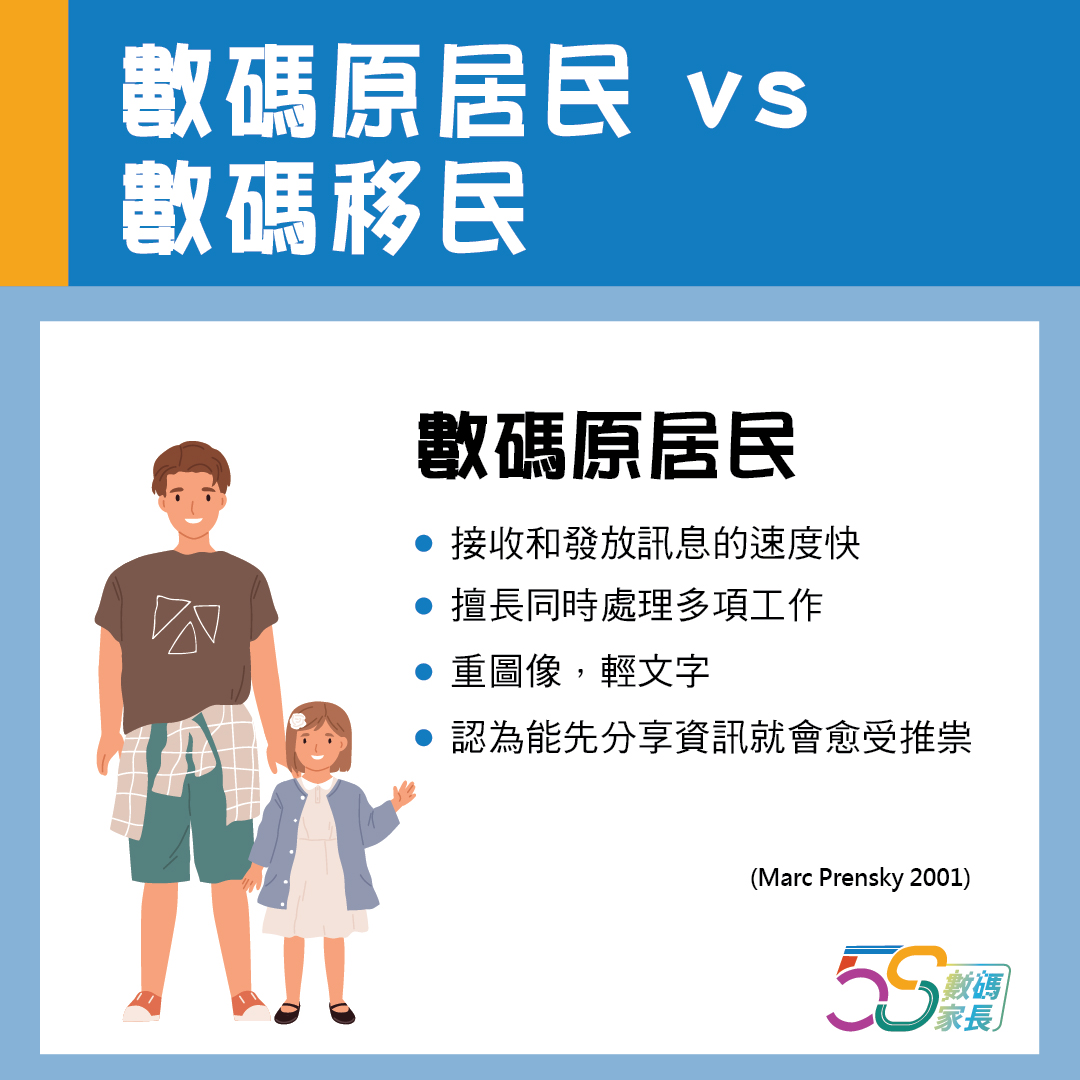
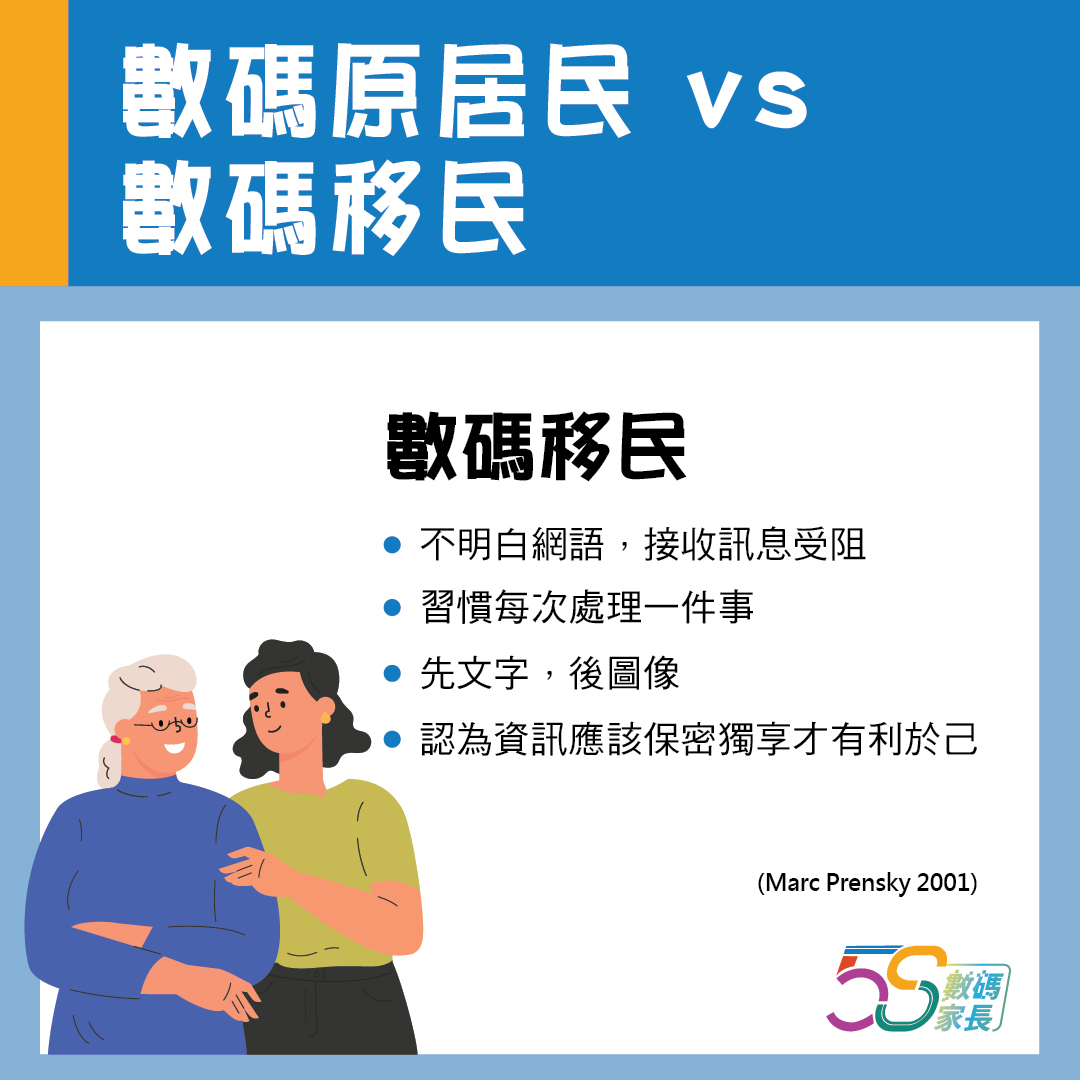
The impact of social media platforms on children is both positive and negative. A 2018 study by Hong Kong Baptist University revealed that young people who follow news via social media platforms demonstrate slightly superior news literacy skills compared to those who rely on traditional media. As “digital natives”, children whose “native language” comprises computers, digital games and internet slang process information rapidly and excel at multitasking. These represent the advantages of the digital generation.
However, these “digital natives” tend to link the sequence of information sharing with the degree of admiration received. They may base their self-worth on social media platforms, comparing their own achievements with those of others, and are prone to anxiety over matters occurring on these platforms. Furthermore, a 2017 study by the Royal Society for Public Health indicated that photo-sharing platforms like Snapchat and Instagram may impose psychological burdens on young people with lower body confidence. Adolescent secondary school pupils, being particularly sensitive to others' evaluations of their social media presence, may experience feelings of emptiness, loneliness, apathy, pressure, depression and inferiority if their posts fail to garner attention.
(This image is available in Chinese only.)
(This image is available in Chinese only.)
4. Simple Tips and Tricks
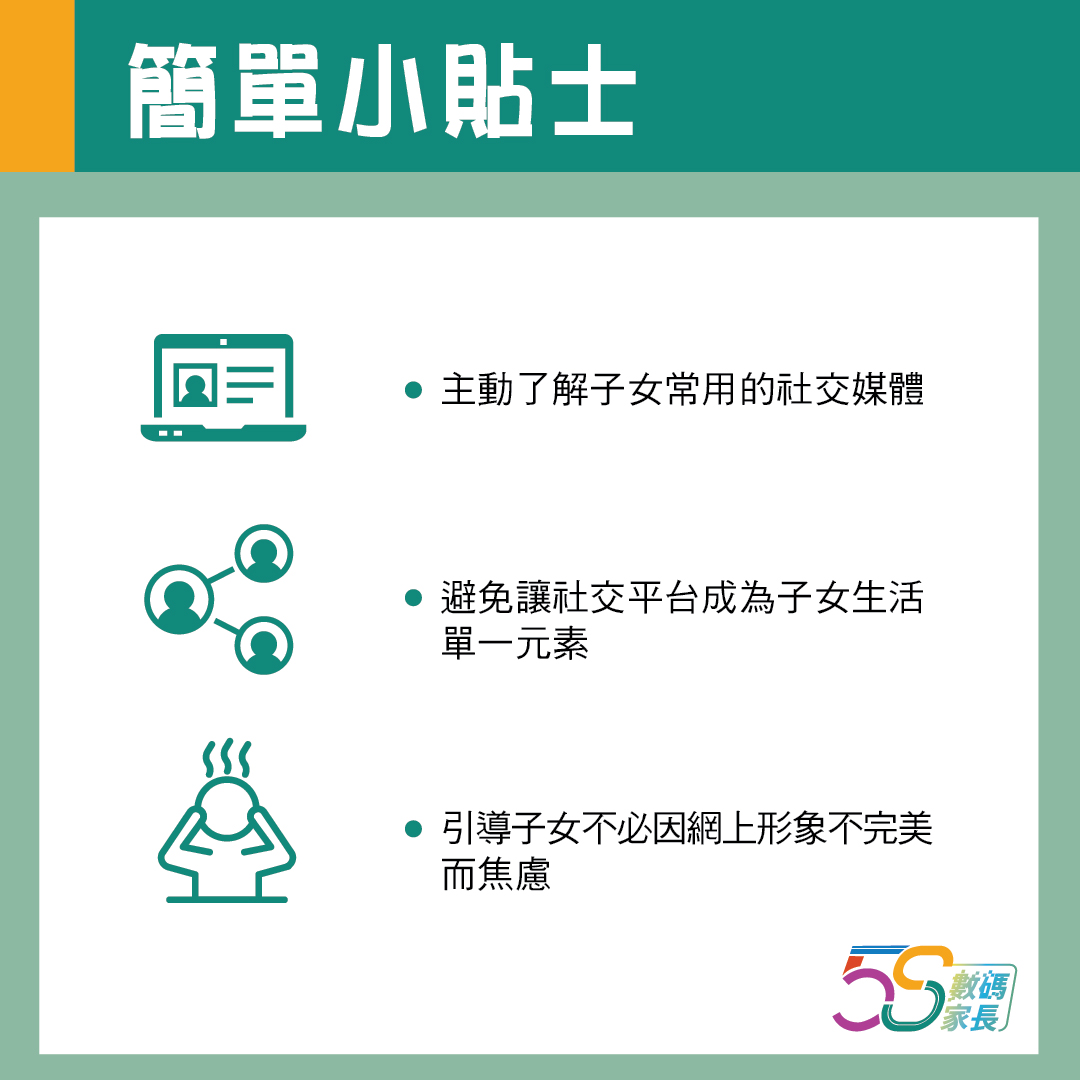
- Parents should familiarize themselves with the social media platforms their children regularly use and take an interest in their online friendships.
- Encourage and assist children in establishing a balanced schedule between online socializing and offline activities, ensuring social media does not become the sole focus of their lives.
- Guide children to understand that many seemingly perfect online acquaintances may be carefully curated personas, and they need not feel unduly anxious about imperfections in their own real-life or online image.
- Advise children against video calls with strangers and discourage meeting online acquaintances in person. Even if both parties trust each other, exercise caution: meet in public places or bring a friend along, and always inform a friend or family member beforehand.
(This image is available in Chinese only.)