
Know yourself, know your child! Children of different ages have different online habits and require different approaches!
With the pandemic still ongoing, most schoolchildren are now well-versed in using the internet. Has school suspended face-to-face teaching? Then let’s conduct online lessons via video conferencing and submit homework online! Unable to communicate face-to-face with teachers and classmates after school? Instant messaging apps come in handy! The development of the internet has completely transformed people’s lives, and as children spend more and more time in the online world, parents inevitably worry about their daily internet usage. Where should we start to help our children avoid internet addiction?
Real Life Examples
Story #1: Revising Online?

(This image is only available in Chinese.)

(This image is only available in Chinese.)

(This image is only available in Chinese.)
Small Advice
Parents should understand that jumping to conclusions and engaging in excessive arguments will only make children less willing to share with their parents, leading to a strained parent-child relationship and making discipline increasingly difficult. Parents should first familiarise themselves with the content their children access online and their needs, then discuss the matter with them and establish an agreement that satisfies both parties. Where possible, parents may move the computer to a location within sight, such as the living room. By gaining a general understanding of their children’s online activities, parents can not only exercise effective supervision but also encourage their children to make good use of the internet for learning.
Article Content:
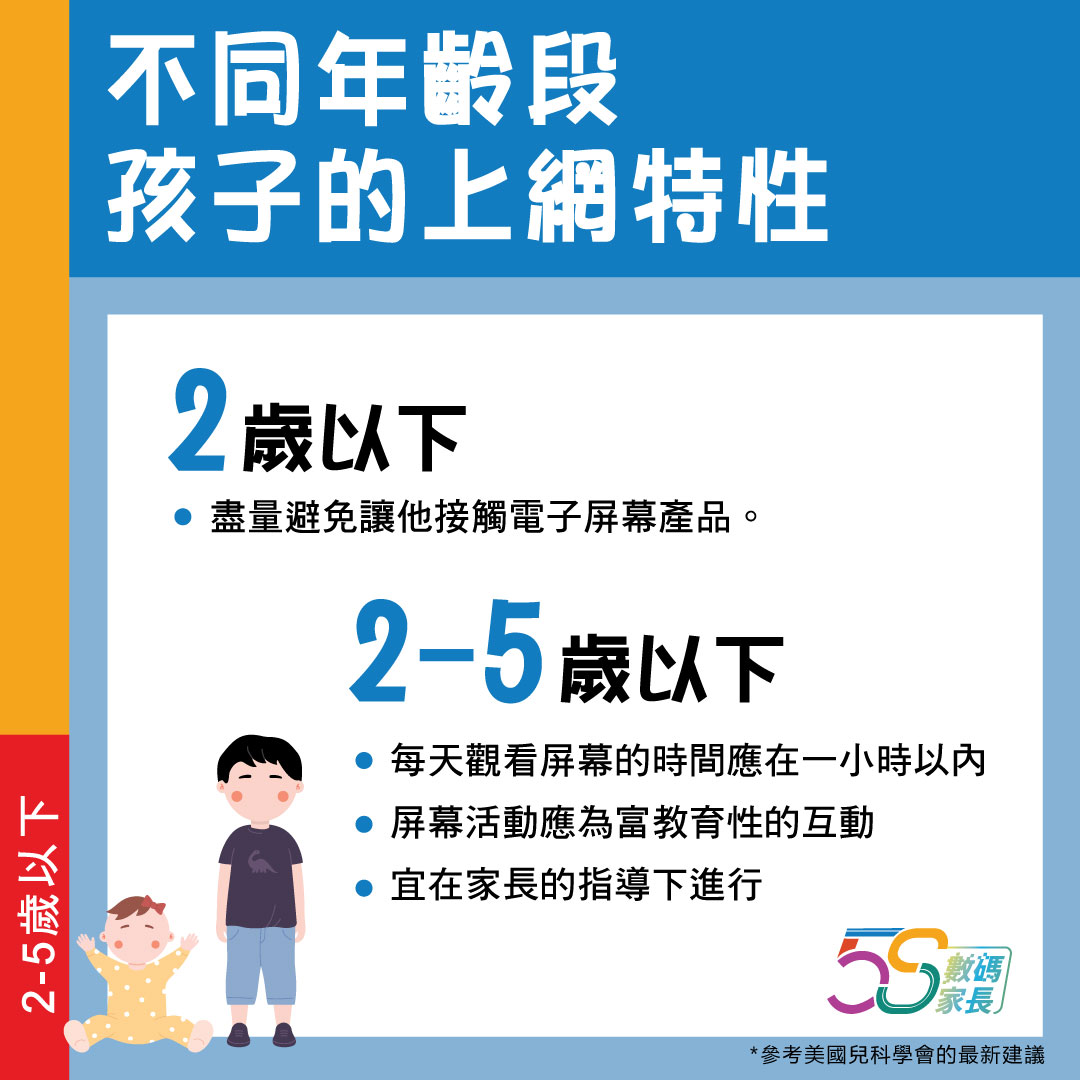
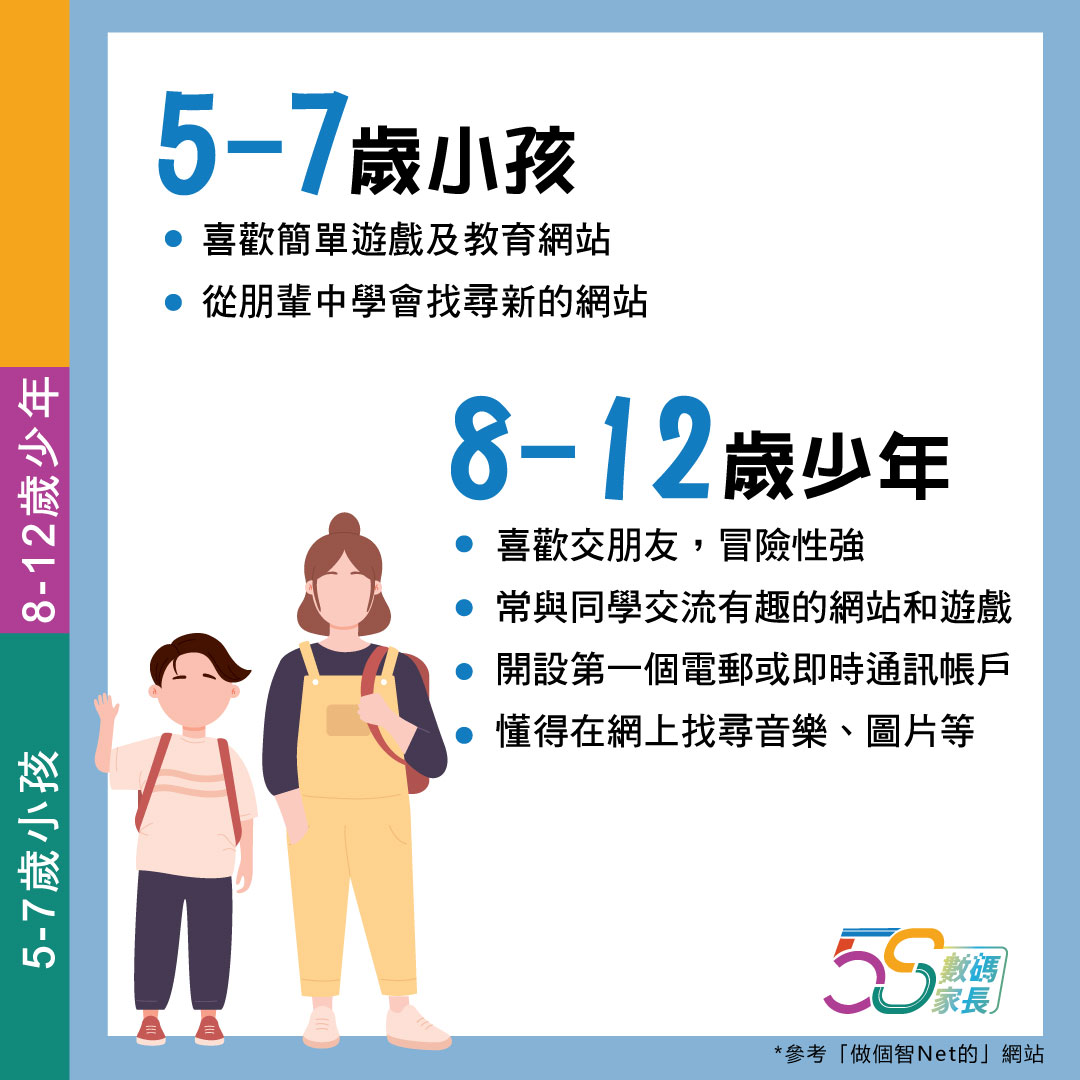
- Understanding Your Child’s Internet Usage (Part 1): Children of different age groups have varying developmental needs, resulting in distinct online behaviours (children under 2, 2–5 years old, 5–7 years old, 8–12 years old, 13–17 years old, and those aged 18 and over)
- Understanding Your Child’s Internet Usage (Part 2): An introduction to online learning platforms commonly used in schools
- Quick Tips and Tricks
1. Distinct Online Behaviours in Children of Different Age Groups
Parents can start by assessing their children’s internet needs based on their age.
(This image is only available in Chinese.)
(This image is only available in Chinese.)

(This image is only available in Chinese.)
2. An Introduction to the Online Learning Platforms Commonly Used by Schools
Since the onset of the pandemic, many schools have gradually adopted a blended learning approach, offering both face-to-face lessons and using digital tools to deliver online classes or create learning materials for self-study. As a parent, do you know whether your child is actually studying when they are online? Why not take a look at the online learning platforms commonly used by schools?
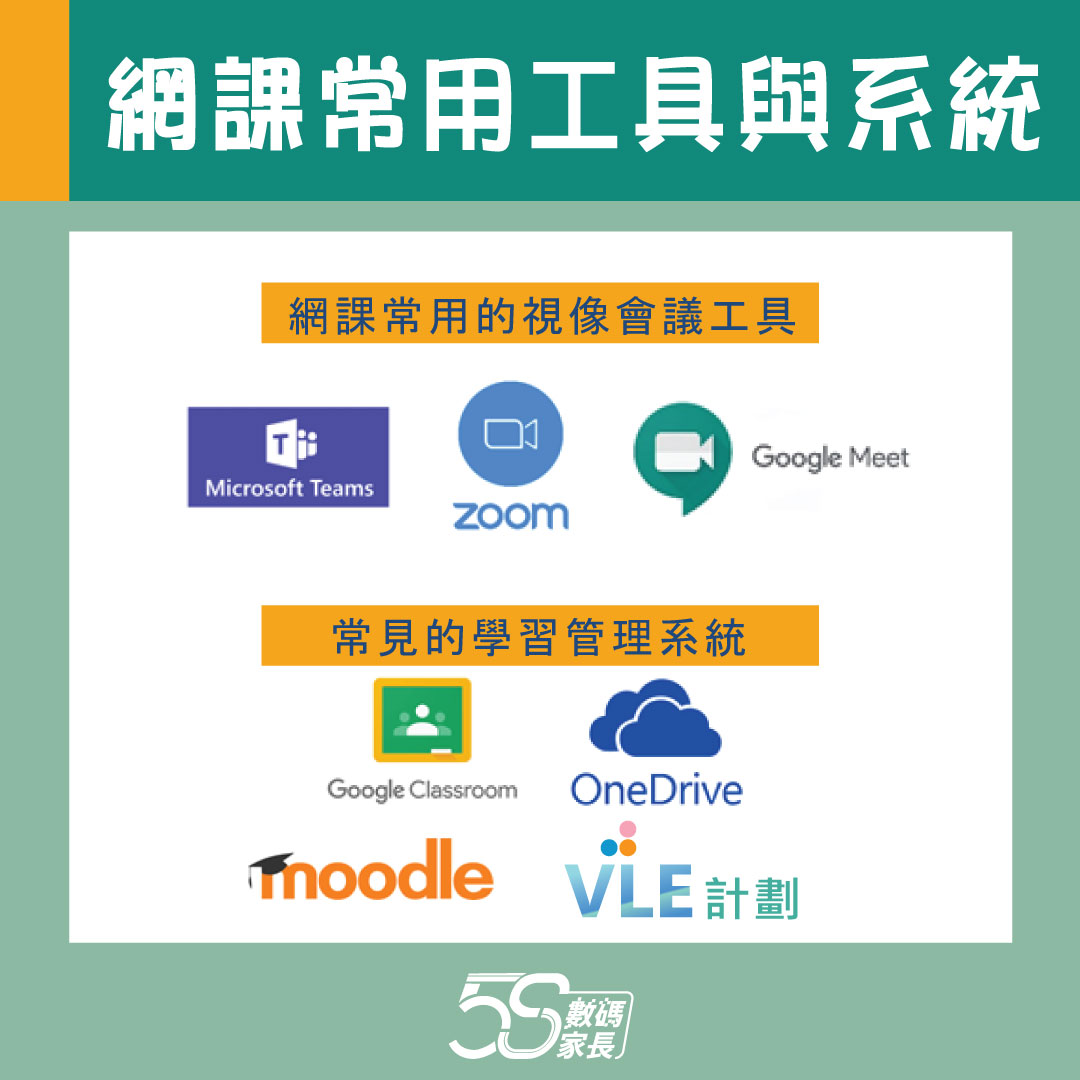
Currently, schools in Hong Kong predominantly use the following tools for online classes:
(This image is only available in Chinese.)
These platforms help schools and teachers manage pupils’ learning progress in one place, allowing them to set and collect homework, share notices, teaching materials and videos, and more.
Currently, some online parent seminars are also being held using video conferencing tools; parents may wish to try using these tools to find out more.
Parents may also visit the following link to find out more about the school’s online learning tools – ‘How can parents cope with the new normal of learning after school closures?’ seminar (14:43–25:04)
3. Simple Tips and Tricks
- Children of different ages have varying needs when it comes to using the internet; it is important to first understand your child’s online habits before you can manage their internet use effectively.
- There are various platforms on the internet offering a wide range of services, with online learning typically provided by specialist learning platforms.
- ‘I don’t know the first thing about modern technology – what can I do?’ – Today’s technological products have been improved to be simpler and easier to learn, with the user’s convenience in mind. With a little patience and time, many parents can gradually learn how to use them. For example, parents can try using video conferencing tools to join online parent workshops and experience the environment in which their children usually attend online lessons.