
To help children study more effectively, using the right strategies is key. Here are some useful tips, hoping to assist parents in enhancing their children's revision effectiveness.
Strategy #1: Provide a Safe and Comfortable Study Environment
As the saying goes, “A craftsman who wants to do his work well must first sharpen his tools.” To ensure children study efficiently, providing a suitable environment is fundamental. Children generally concentrate better in a secure, comfortable setting where they are unlikely to be disturbed. The ideal solution is to designate a quiet corner at home for revision. Alternatively, consider community facilities such as public study rooms, communal rest areas, or green spaces. Should parents notice their child struggling to focus or remain seated during revision, it is important to identify any potential distractions, particularly regarding their mental state and emotional well-being.

(This image is only available in Chinese)
Strategy #2: Monitor Your Child's Emotional Shifts, Show Concern for Their Feelings, and Share Your Own Experiences and Emotions with Them
A child's academic performance is intrinsically linked to their mental wellbeing. Recently, EdCity invited Dr Lam Ching-choi, Chairman of the the Advisory Committee on Mental Health (ACMH), to discuss the impact and importance of mental health on schoolchildren's development. Dr Lam recounted how, during his secondary school years, encouragement and care from a classmate helped him emerge from a period of negative emotions.
Dr Lam encourages parents to share their own feelings and emotions with their children. For instance, parents might discuss their reactions when they see their child playing mobile games, helping children understand that parents also experience emotions and have personal feelings. By setting an example through open sharing, children will be more willing to confide in their parents during their formative years. This mutual exchange helps dispel negative emotions, promotes mental wellbeing, and creates favourable conditions for academic improvement.

(This image is only available in Chinese)
Strategy #3: Balancing Study with Rest and Relaxation – Mastering the ‘4Rs’ for Mental Health
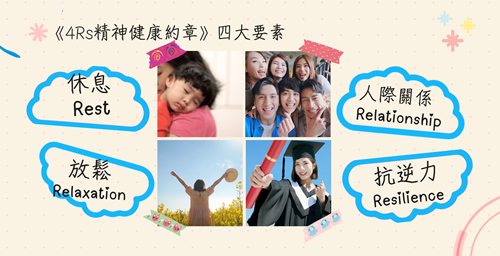
After sustained periods of focused revision, children inevitably feel fatigued, leading to diminished efficiency. Parents should therefore ensure their children take breaks to recharge. Parents may refer to the Education Bureau's ‘4Rs Mental Health Charter’* – specifically the two ‘R’s: Rest and Relaxation.
To ensure children rest well, Dr Lam advises parents to help establish healthy daily routines from an early age, including adequate rest, sufficient sleep, and space for leisure activities. Dr Lam specifically notes that nine hours of sleep combined with one hour of relaxation activities (such as running in the park) can clear toxins from the brain, ultimately enhancing academic performance.
(This image is only available in Chinese)
Summary
Ensuring children's mental and emotional wellbeing is crucial for maximising learning efficiency and boosting revision effectiveness. Parents wishing to learn more methods for promoting their children's mental wellbeing may revisit the parent seminar recap page: ‘The Impact and Importance of Mental Health on Schoolchildren's Development’.
Reference: Student Mental Health Information Online - Promotional Resources for Schools